
Sweet Gas Condensate
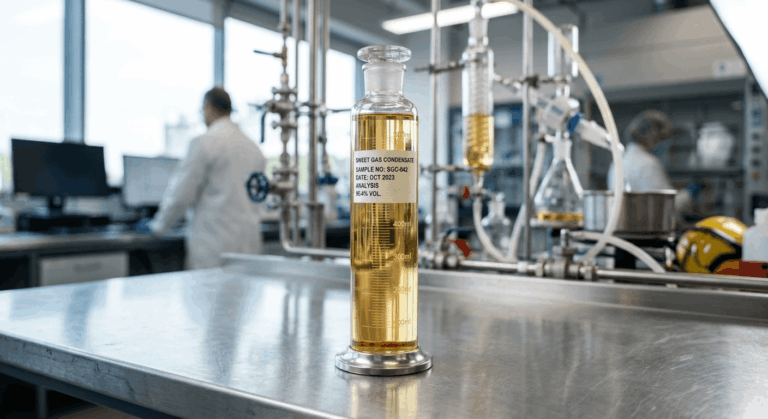
Sweet Gas Condensate: The Premium Feedstock for Refineries & Petrochemicals
Sweet Gas Condensate is one of the most valuable liquid hydrocarbons in the oil and gas industry. Characterized by its ultra-low sulfur and mercaptan content, it is universally recognized as a premium feedstock for modern refineries and petrochemical complexes. Hober Tejarat Pasargad, backed by reliable sourcing and robust logistical infrastructure, supplies this strategic product on a global scale while strictly adhering to international standards.
Technical Specifications and Quality Analysis
Due to its high API gravity and lightweight nature, sweet condensate delivers an exceptionally high yield of light petroleum derivatives. Comprehensive quality and quantity analyses are certified by globally recognized third-party inspection agencies (such as SGS or GeoChem). Key technical highlights include:
- API Gravity: Exceptionally high, typically ranging from $50$ to $70$, indicating a superior concentration of light hydrocarbons.
- Sulfur Content: Ultra-low (usually $< 0.1\%$ or under $50$ ppm), effectively eliminating the need for costly and complex desulfurization processes.
- Reid Vapor Pressure (RVP): Strictly controlled to guarantee maximum safety during maritime shipping and bulk storage.
- Basic Sediment & Water (BS&W): Maintained at an absolute minimum (near zero) to prevent the corrosion of sensitive refining equipment.
Primary Applications in Downstream Industries
Thanks to its high purity and “sweet” (low-sulfur) profile, there is immense global demand for this condensate across several key sectors:
- Naphtha Production: Serves as the ultimate feedstock for producing light and heavy naphtha, which is essential for petrochemical steam crackers generating olefins (ethylene, propylene).
- Gasoline Blending: Highly valued as a blending component to boost octane ratings and enhance the overall quality of finished motor gasoline.
- Heavy Crude Diluent: Blended into heavy crude oil to significantly reduce viscosity, thereby facilitating smoother transportation through pipelines.
Logistics, Export, and Shipping Solutions
Handling highly volatile and large-volume hydrocarbons requires specialized supply chain expertise. We provide comprehensive maritime logistics for our B2B partners:
- Bulk Shipments: Exclusively transported via specialized Oil Tankers in full compliance with the International Safety Guide for Oil Tankers and Terminals (ISGOTT).
- Flexible Incoterms: Offering adaptable delivery terms including FOB at the port of origin, or CIF/CFR directly to the buyer’s discharge port.
- Safe Storage Facilities: Stored in standard floating-roof tanks at the port to prevent vapor loss and preserve the integrity of the condensate prior to loading.
| QUALITY | |||
| TEST | METHOD | UNIT | GUARANTEE RANGE |
|---|---|---|---|
| Sp.GR @ 60°F | ASTM D 4052 | — | |
| Density | Kg/m³ | 0.725 | |
| Distillation | |||
| IBP | ASTM D 86 | °C | 44 |
| 5% recovered at | ASTM D 86 | °C | 58 |
| 10% recovered at | ASTM D 86 | °C | 66 |
| 20% recovered at | ASTM D 86 | °C | 79 |
| 30% recovered at | ASTM D 86 | °C | 98 |
| 40% recovered at | ASTM D 86 | °C | 106 |
| 50% recovered at | ASTM D 86 | °C | 129 |
| 60% recovered at | ASTM D 86 | °C | 154 |
| 70% recovered at | ASTM D 86 | °C | 182 |
| 80% recovered at | ASTM D 86 | °C | 204 |
| 90% recovered at | ASTM D 86 | °C | 243 |
| 90% recovered at | ASTM D 86 | °C | 264 |
| FBP | ASTM D 86 | °C | 279 |
| Recovery | ASTM D 86 | Vol% | 99 |
Frequently Asked Questions
What is the Minimum Order Quantity (MOQ) for Sweet Gas Condensate?
Due to the maritime logistics involved, the MOQ is dictated by standard vessel capacities for bulk shipments. Please consult our commercial department for specific tonnage requirements and available vessel sizes.
How do you guarantee the quality and low sulfur content of the cargo?
Quality and Quantity (Q&Q) are rigorously inspected, sampled, and certified at the loading port by independent, world-renowned surveyors (e.g., SGS). The official certification is then provided directly to the buyer alongside the shipping documents.
Do you offer Long-Term Contracts (LTC) for continuous supply?
Yes. We actively engage in long-term supply agreements with refineries and petrochemical plants to ensure a steady, reliable, and uninterrupted flow of premium feedstock for their operations.